Set the direction.
The creator supplied the brief and hands-on input. Human attention set the destination and shaped the result.
Stratus · Product development
Stratus creator Ean Krenzin-Blank reports a four-hour build, with one hour of human work and more than 80 combined agent-hours. An airspace-intelligence idea became an application people could explore.
Creator-reported figures for the build window, not independently timed. Agent-hours count combined effort across sessions. Development continued afterward; the screenshots below show the application on 16 September 2026.
The challenge
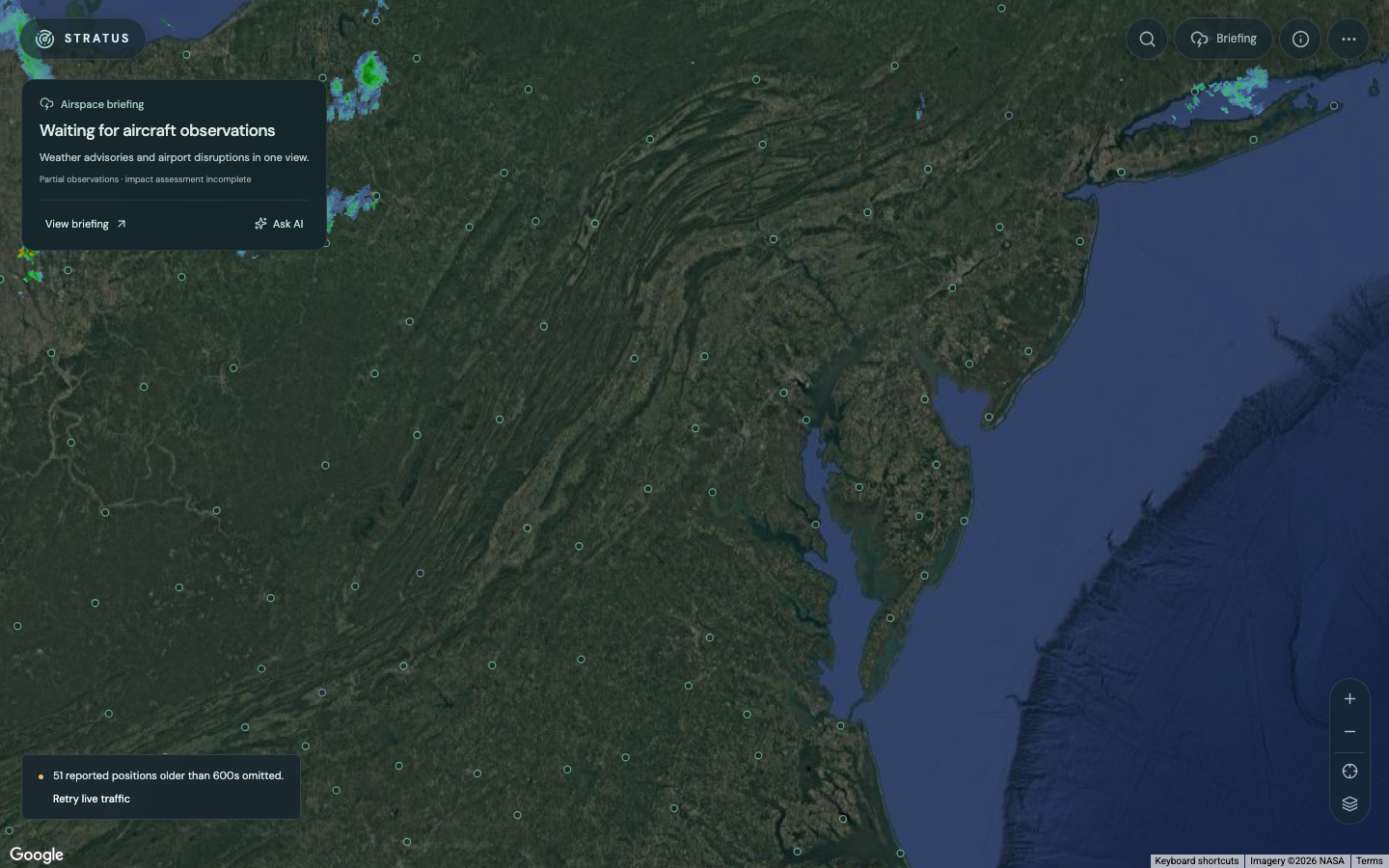
Airspace intelligence is easier to discuss when people can explore it. Stratus brings aircraft observations, weather and airport disruptions into a shared visual interface, giving an abstract product idea a concrete form.
The deliverable was a browser application that could be opened, explored and discussed. That moved the conversation from describing a concept to evaluating an experience.
How the work happened
Elapsed time and combined agent effort measure different things. Multiple sessions can work at once. In the project records, Orchard proposals split the work into tasks with named files and dependencies, with a peer involved in authoring and independent review.
The creator supplied the brief and hands-on input. Human attention set the destination and shaped the result.
File-scoped tasks covered the traffic model, provider integration, API, interface and deployment documentation. Agents could work on separate pieces and bring them back together for review.
The creator’s reported build window produced an interactive starting point. Subsequent releases expanded the application now available through a public link.
Inside the application today
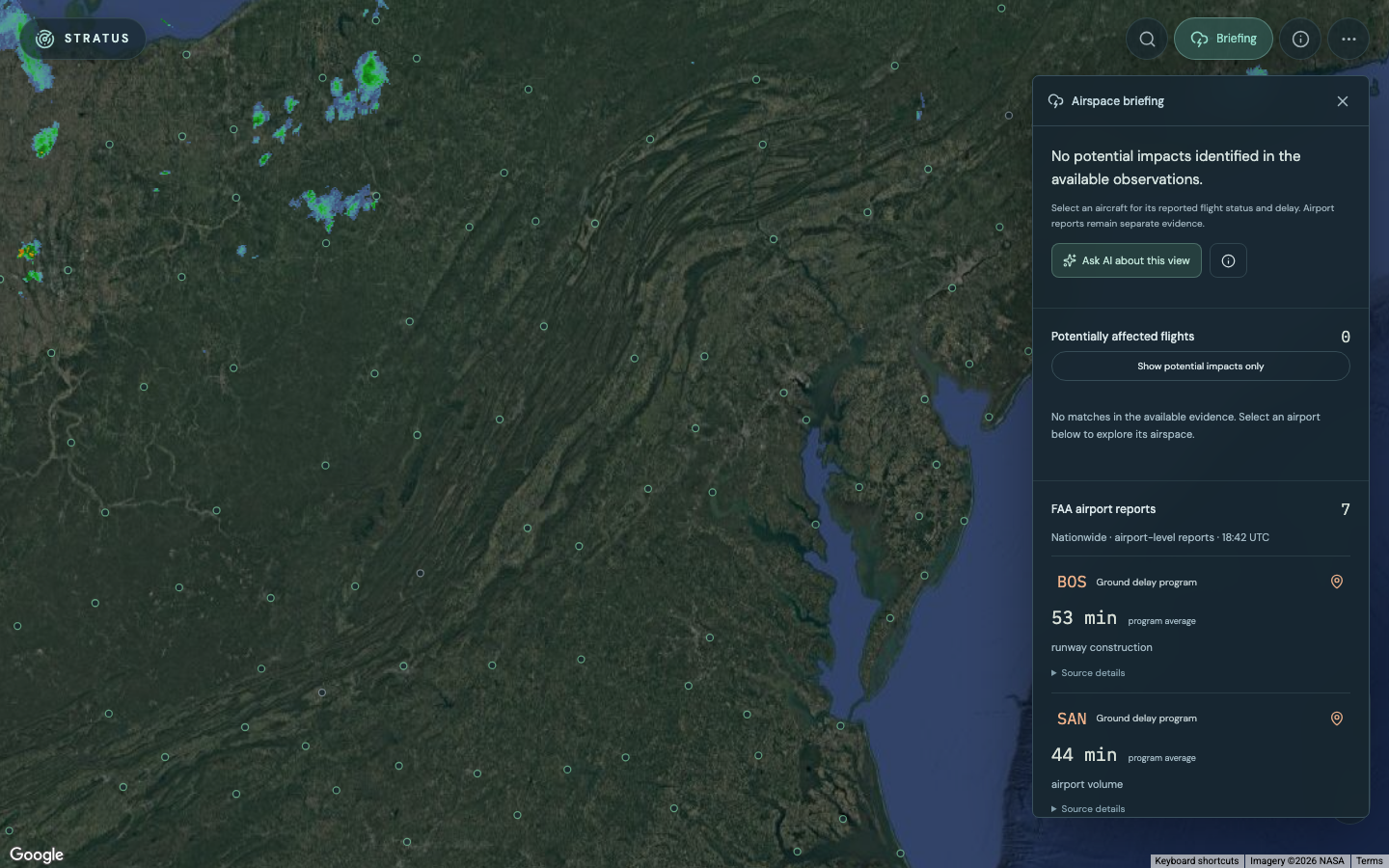
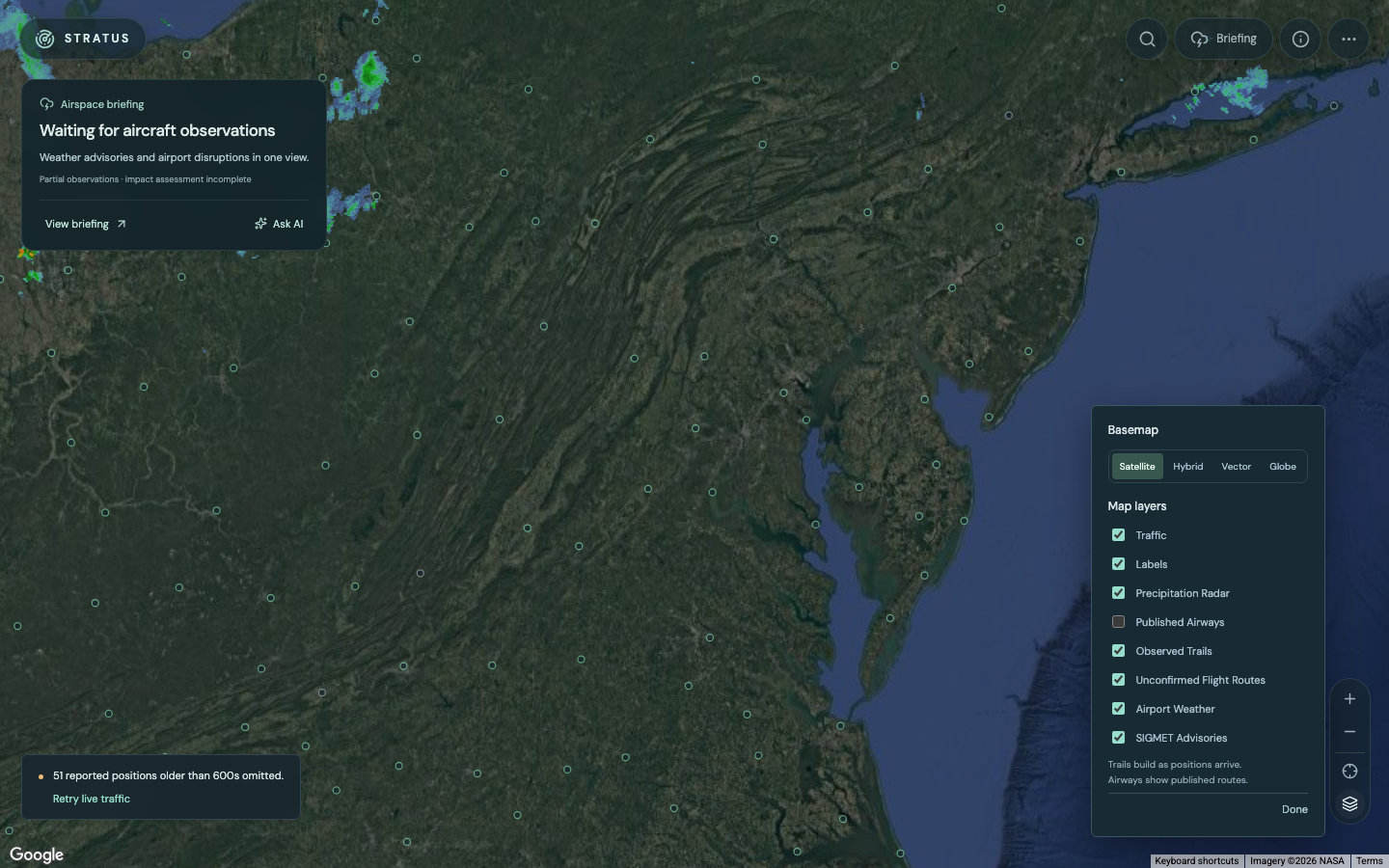
The current application connects live providers: Aviation Edge aircraft reports, NOAA radar and aviation weather, FAA airport disruption reports, Google Maps and a Gemini briefing assistant. The screens below were captured from the deployed site.
The result
Stratus demonstrates what concentrated human direction and parallel agent work can produce together: a substantial, interactive application within a short elapsed window.
This is a proof of concept using live provider data. The interface exposes missing observations and partial coverage; it is not an operational air-traffic control system. The result demonstrated here is a working product experience, with further development visible in the current application.
Explore the deployed applicationEvidence: deployed browser captures and the project’s README, task manifests and delivery notes.View the capture record
Start a conversation
Tell us about the system, the outcome you need, and the constraints that matter. We’ll start by defining the scope together.