Direction & critique
The user set the visual brief and rejected the retro and ceramic directions. That feedback sent the team back to the modeling work.
Case study · design iteration
An Orchard team took a homepage scene from procedural geometry into Blender. The first custom models were rejected too. Here is the feedback, the successive scenes and the work that followed.
Follow the revisionsThe brief
The graphic needs to explain how work moves between a coordinator, agent sessions, shared knowledge and a reviewer. The user asked for custom Blender models and better lighting, while preserving that story.
“looks terrible, go make custom models in blender to make this look good”
User feedback on the visual direction
Original direction · rejected
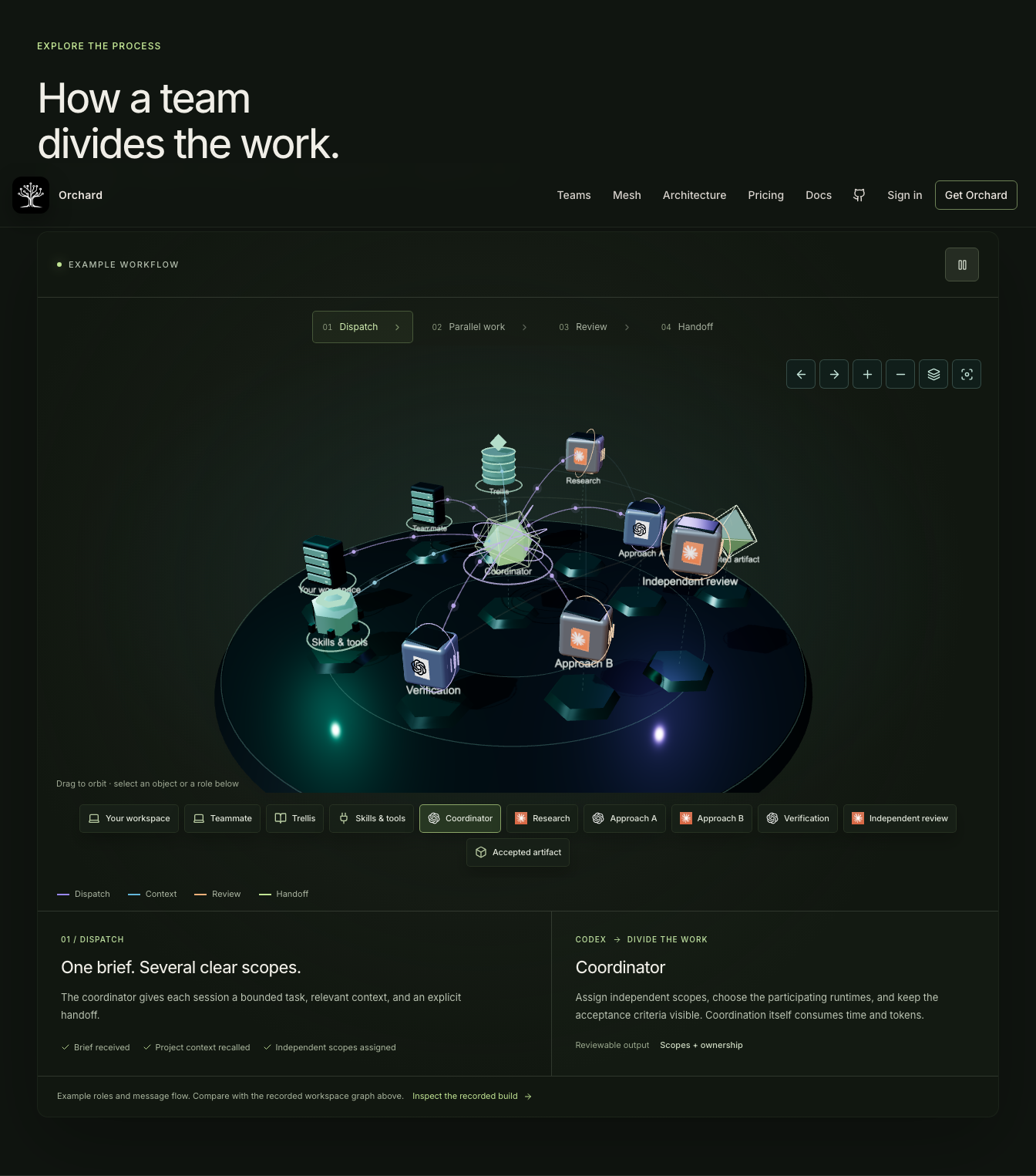
The scene explained task dispatch, independent agents and review. Its metallic platform, plinths and orbiting cages made that coordination look like a dated technology illustration. The request was to keep the concept and change the objects.
Next decisionKeep the workflow. Remove the stage furniture.
Procedural revision
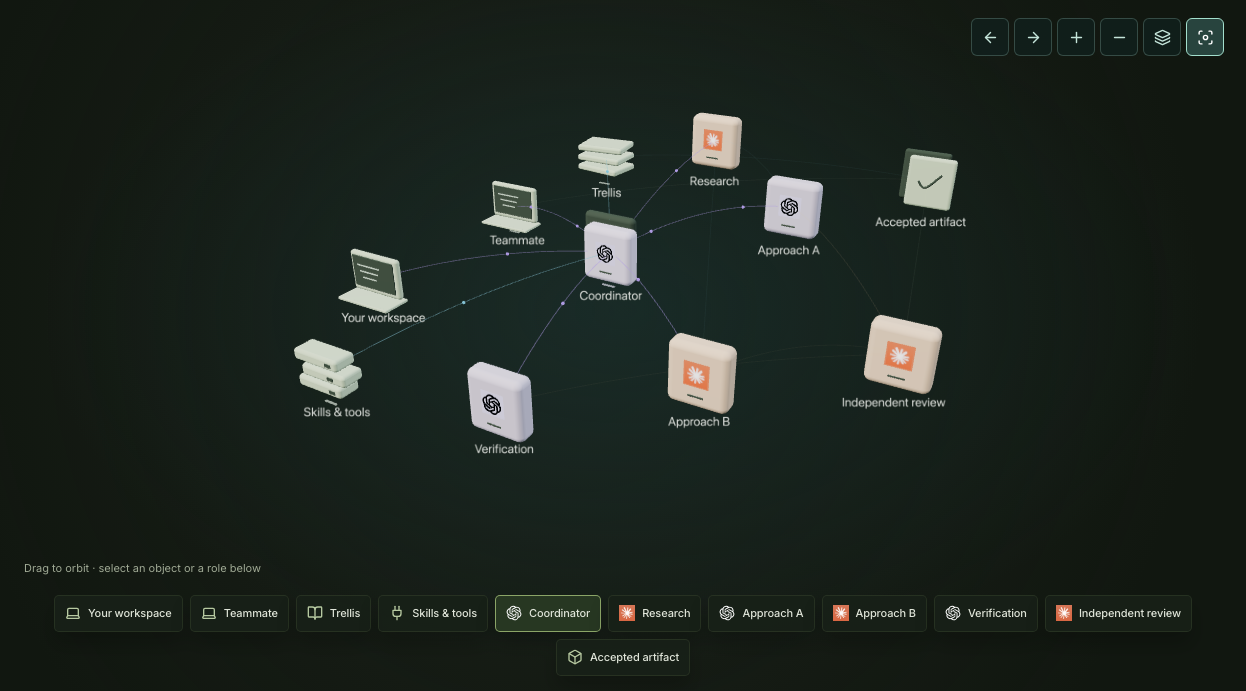
The next pass removed the platform and cages, introduced matte modules and separated the labels. The agents, connections and inspection controls stayed recognizable while the geometry and lighting changed.
Next decisionReview an actual browser scene, then decide what needs custom modeling.
First Blender direction · rejected
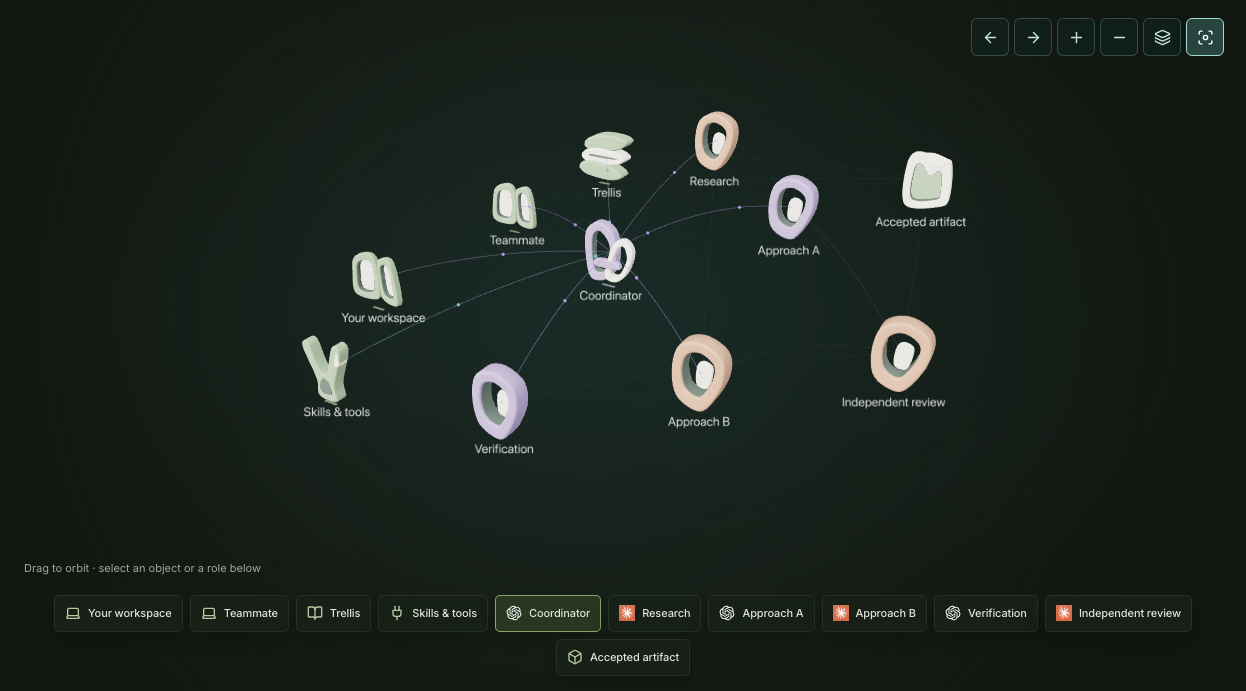
Six role models were authored in Blender, exported as a GLB and connected to the website renderer. The ceramic shapes loaded and could be inspected, but the user rejected the look and the lighting. A technically working export had not met the visual brief.
Next decisionReturn to Blender and make the modeling process visible.
04 · Modeling again
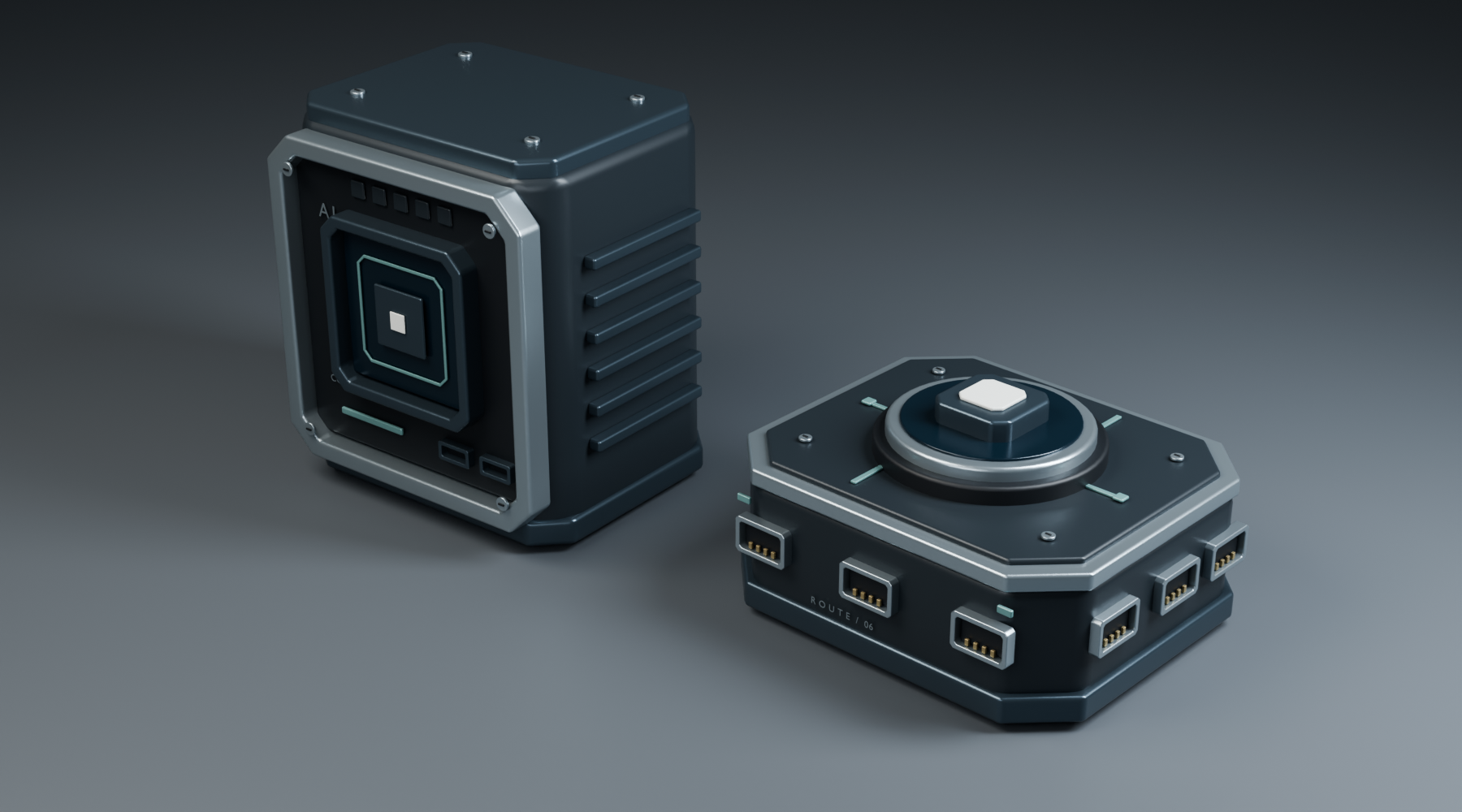
The next pass moves the review into Blender: model shapes, material preview and lighting. The initial compute and routing prototypes were authored before the visible editor review. The captures below document that review and the remaining models being built; the earlier images show website output.
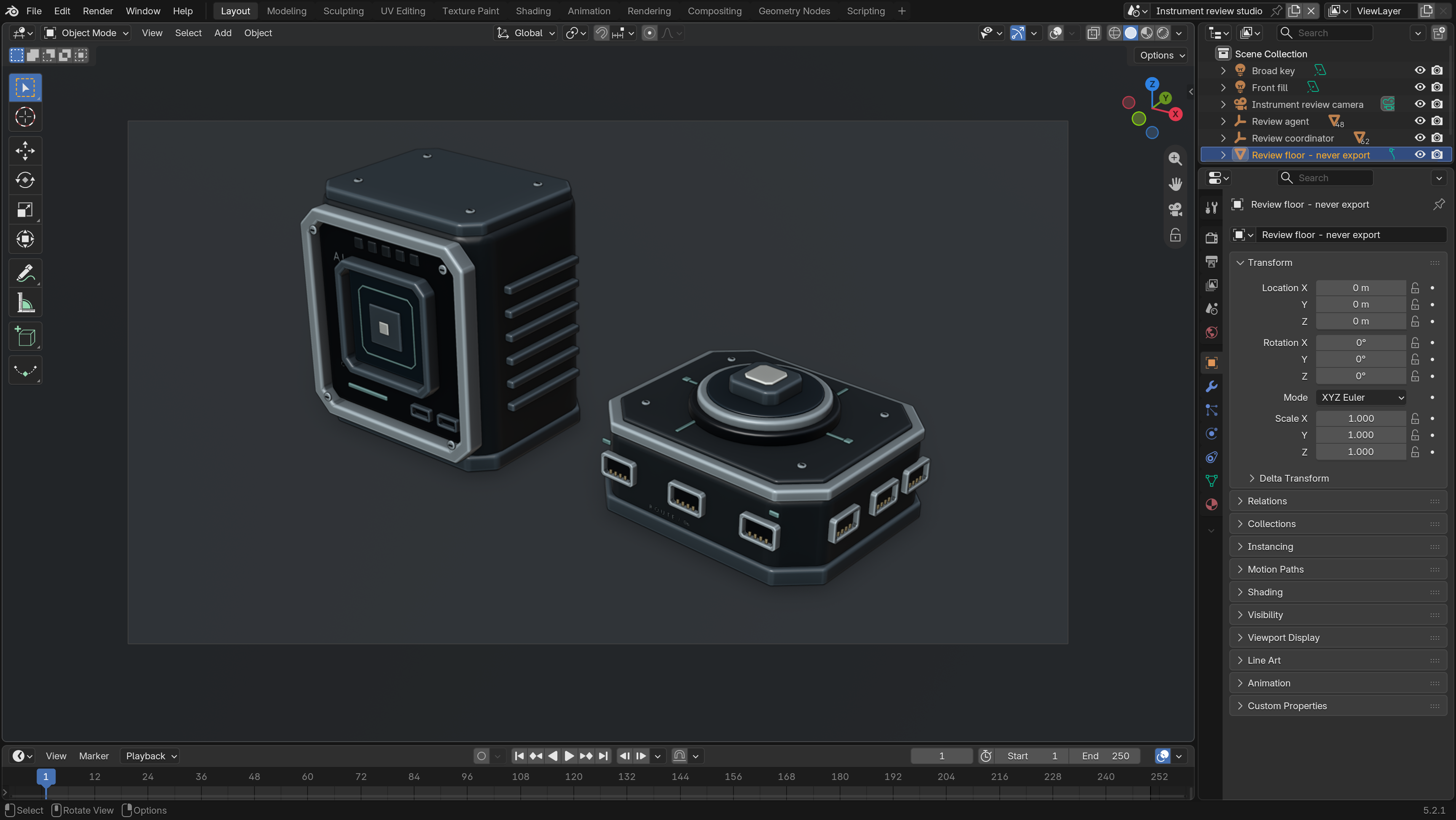
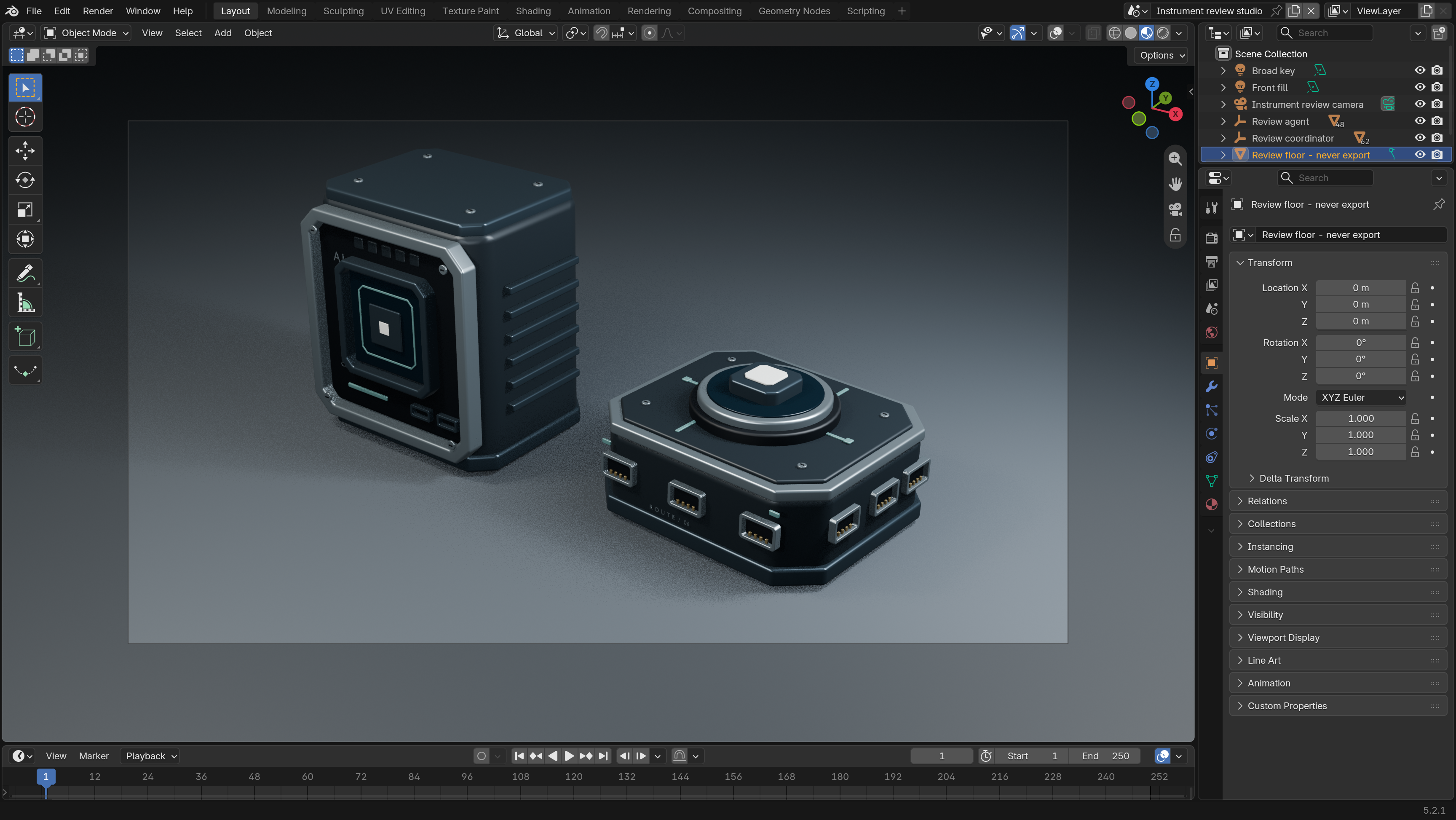
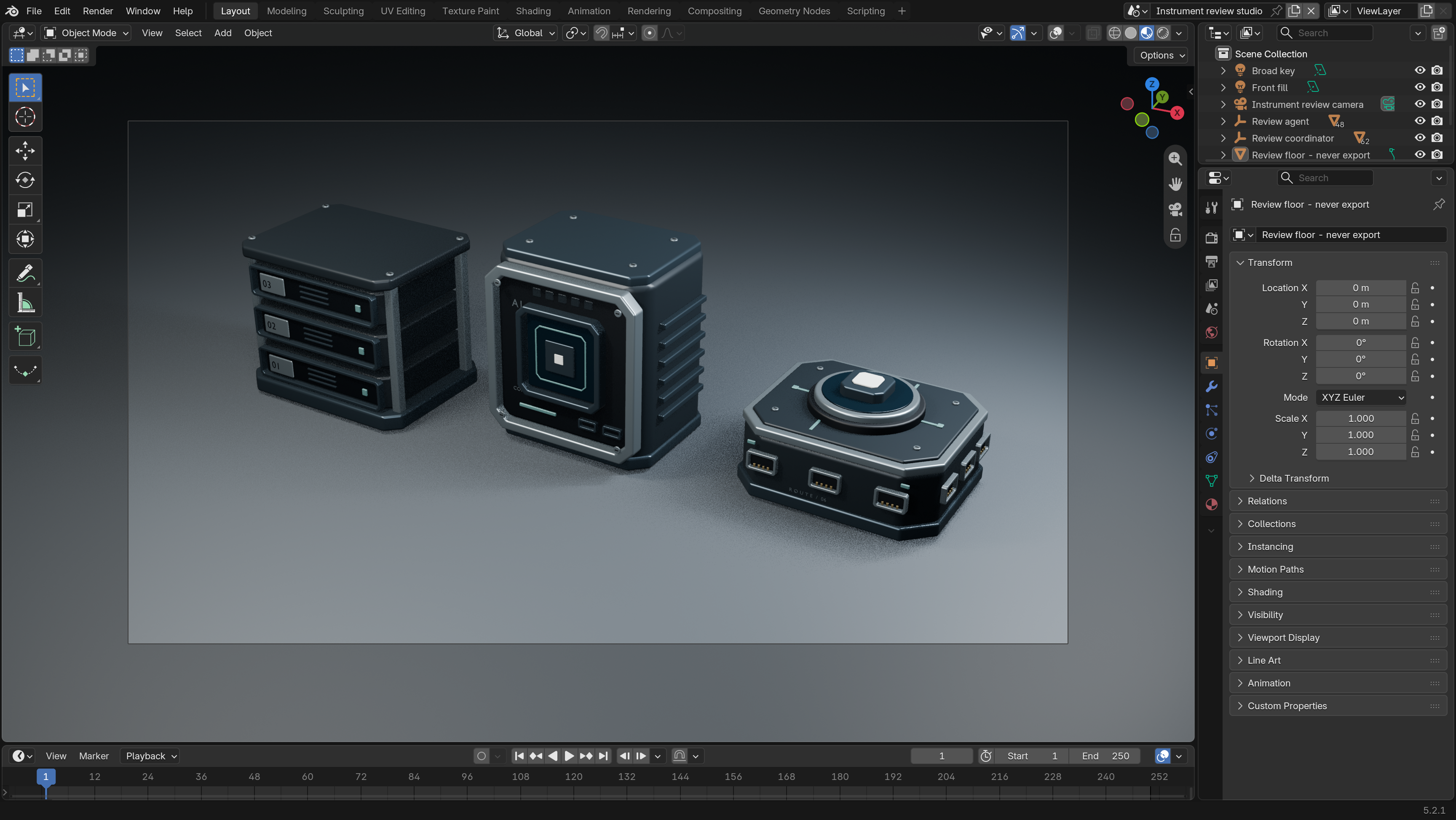
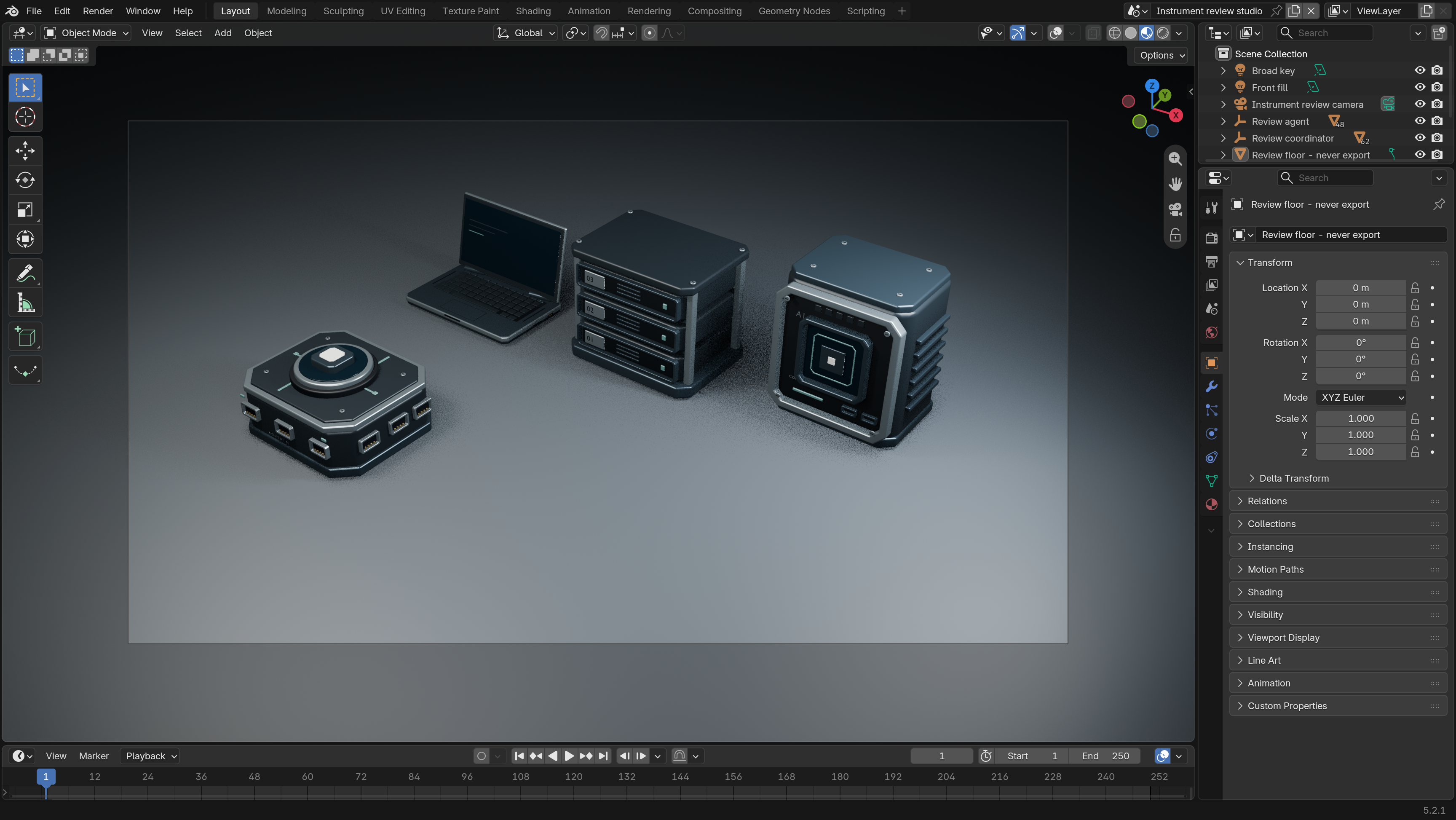
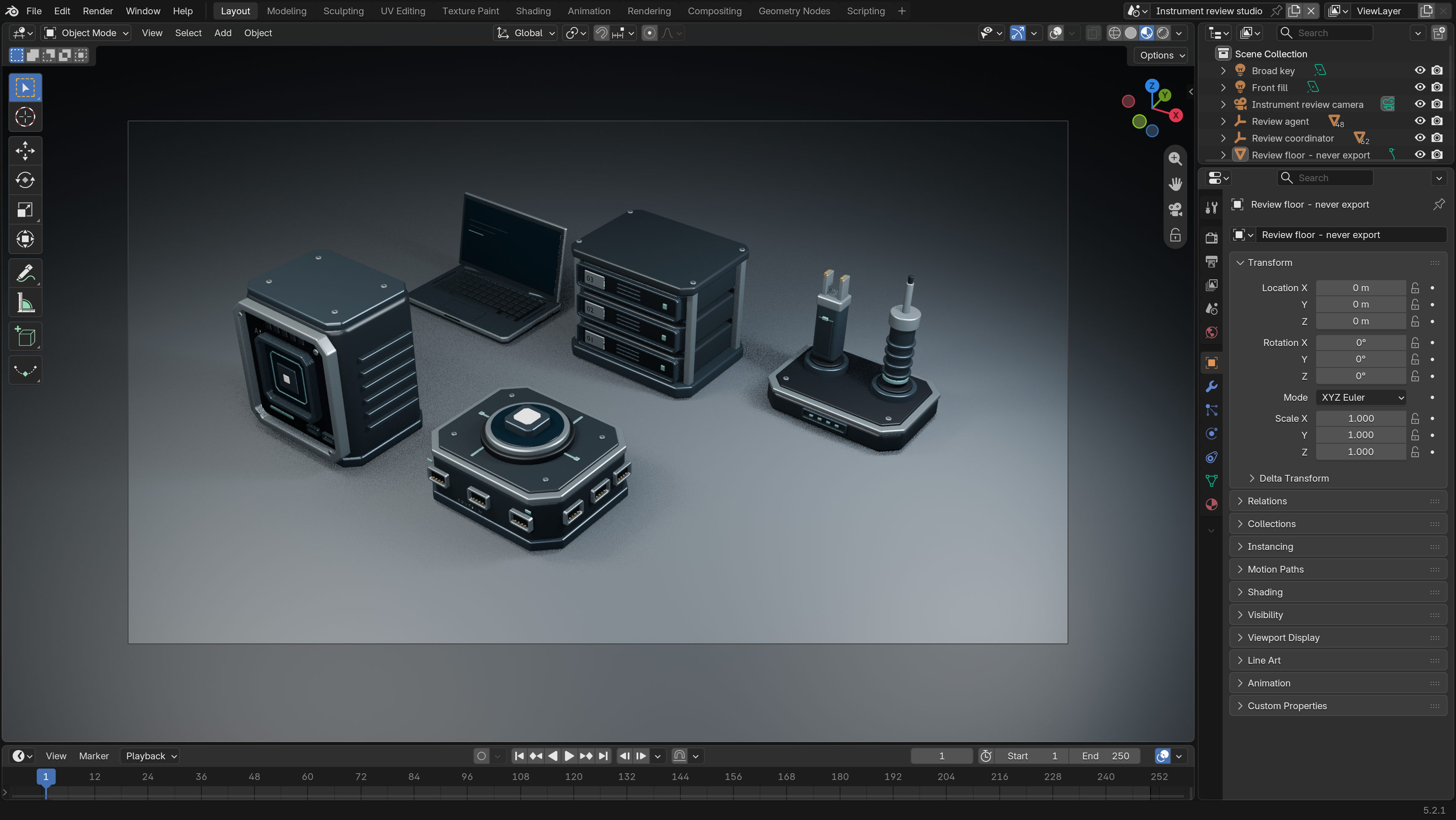
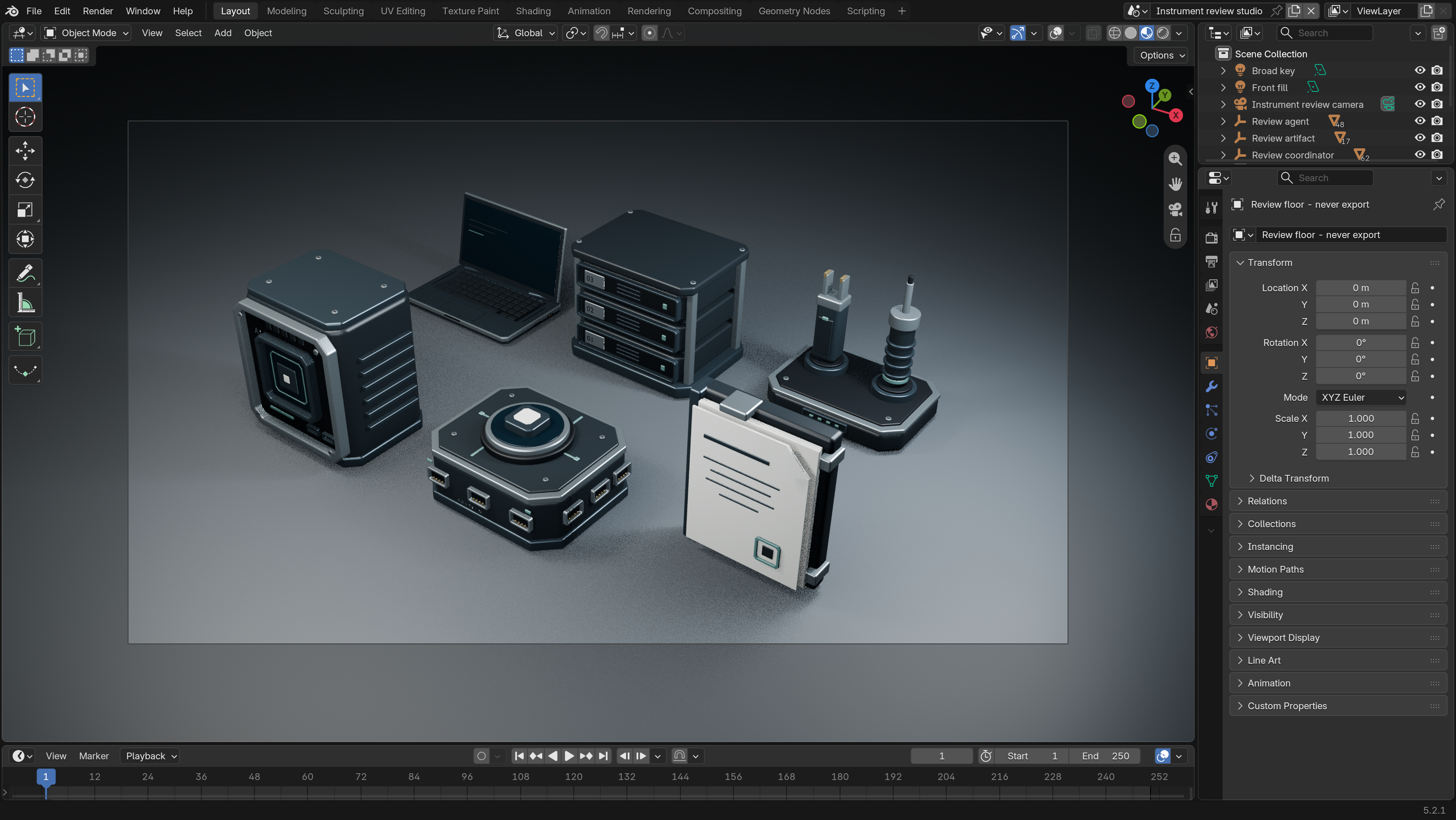
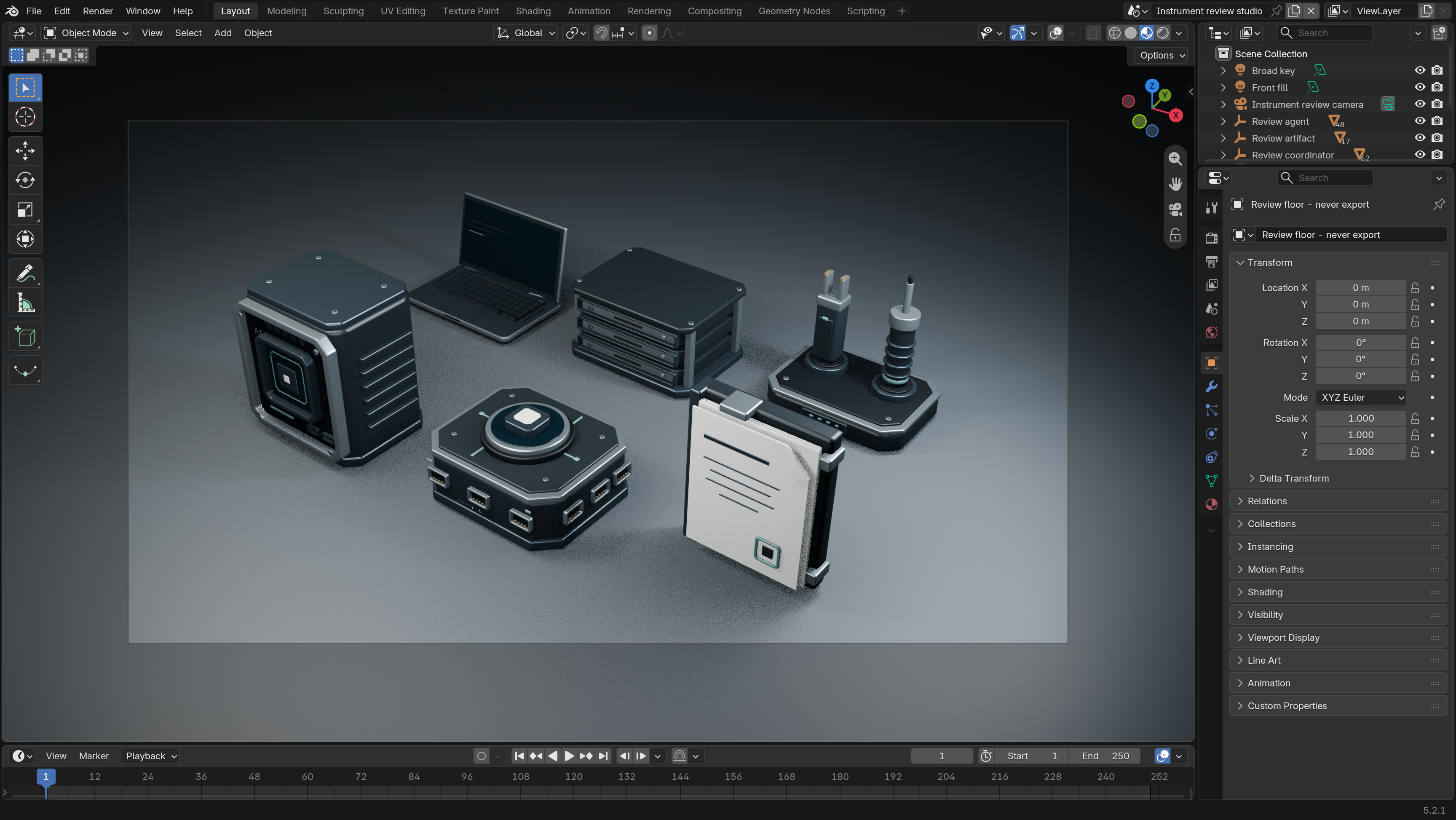
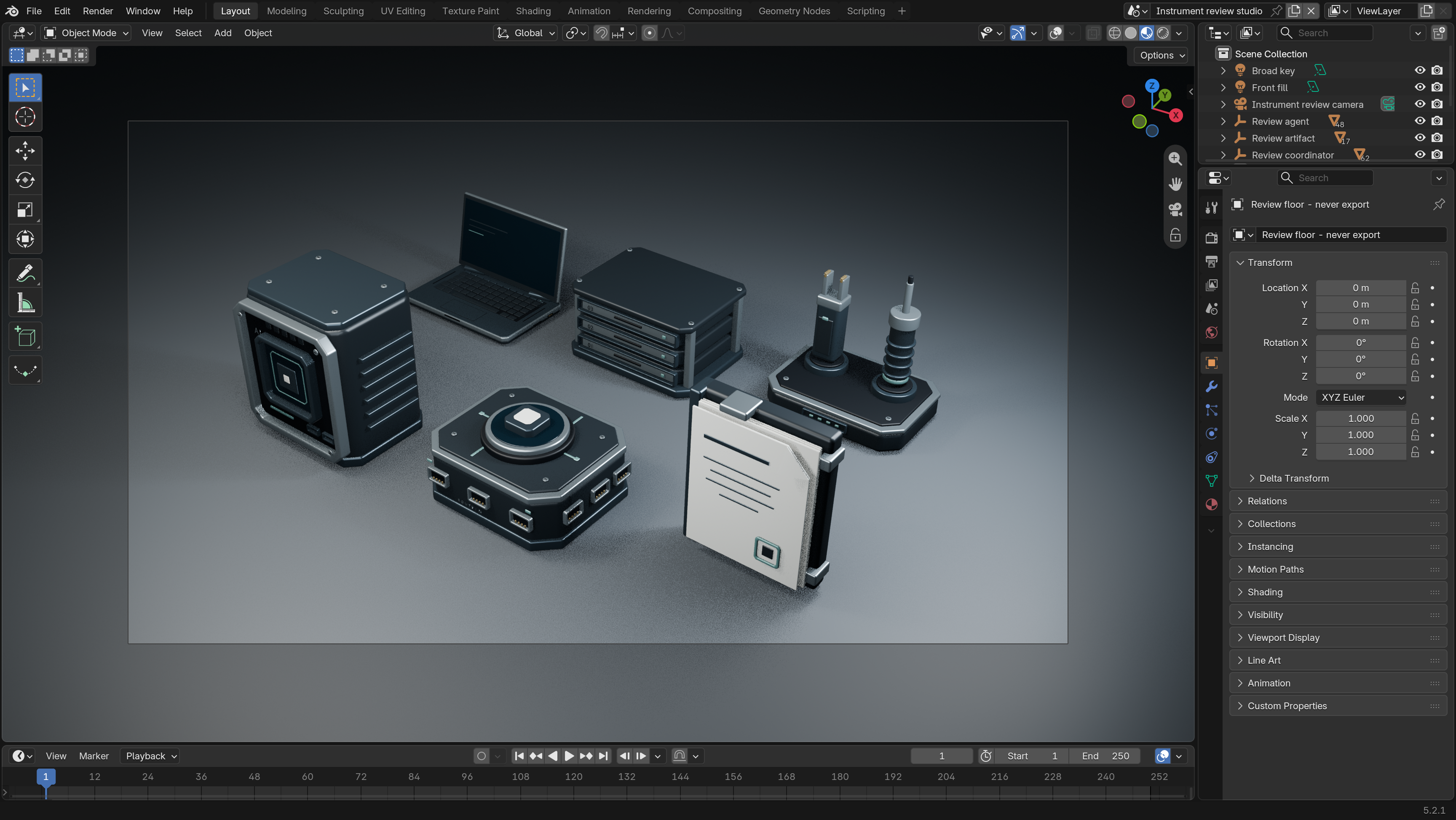
How the work was divided
The user set the visual brief and rejected the retro and ceramic directions. That feedback sent the team back to the modeling work.
A modeling agent authored role assets in Blender and handed over the GLB, editable scene and supporting artifacts.
An integration agent handled loading, lighting and the web scene. A separate review checked resource handling. The case-study work documents the evidence.
05 · Back in the browser
The new scene uses an open laptop, storage cartridges, a precision tool dock, compute modules, a routing hub and a document assembly. Broad reflected light reveals the graphite and metal surfaces. Captions follow the models as the camera moves.
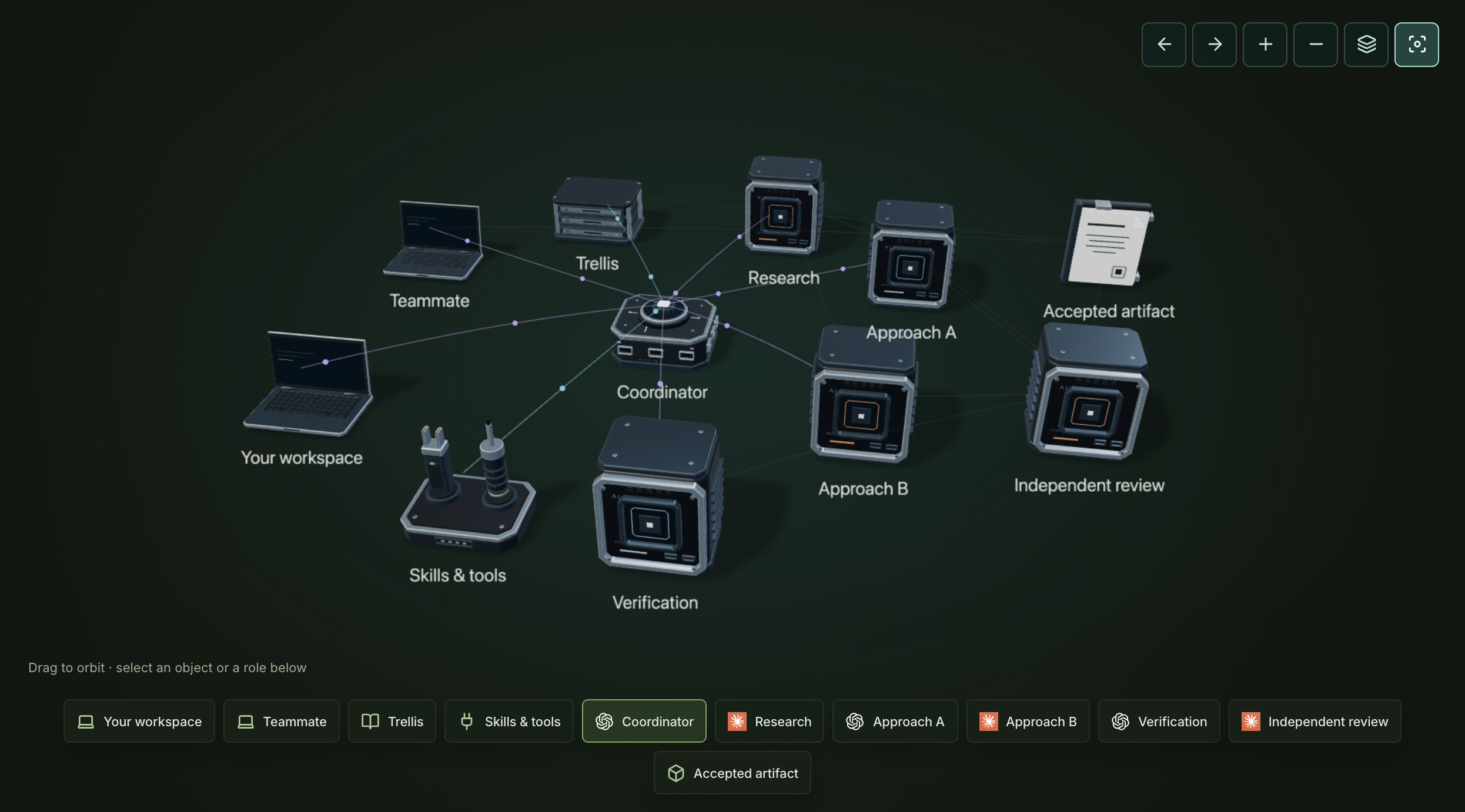
The shared model file is 750 KB and contains 34,716 triangles. The web scene retains role inspection, phase selection, play and pause, and the simpler phone and reduced-motion presentations.
Inspect the coordination section